Replacing fluids and salts is the priority, especially for children and older adults.
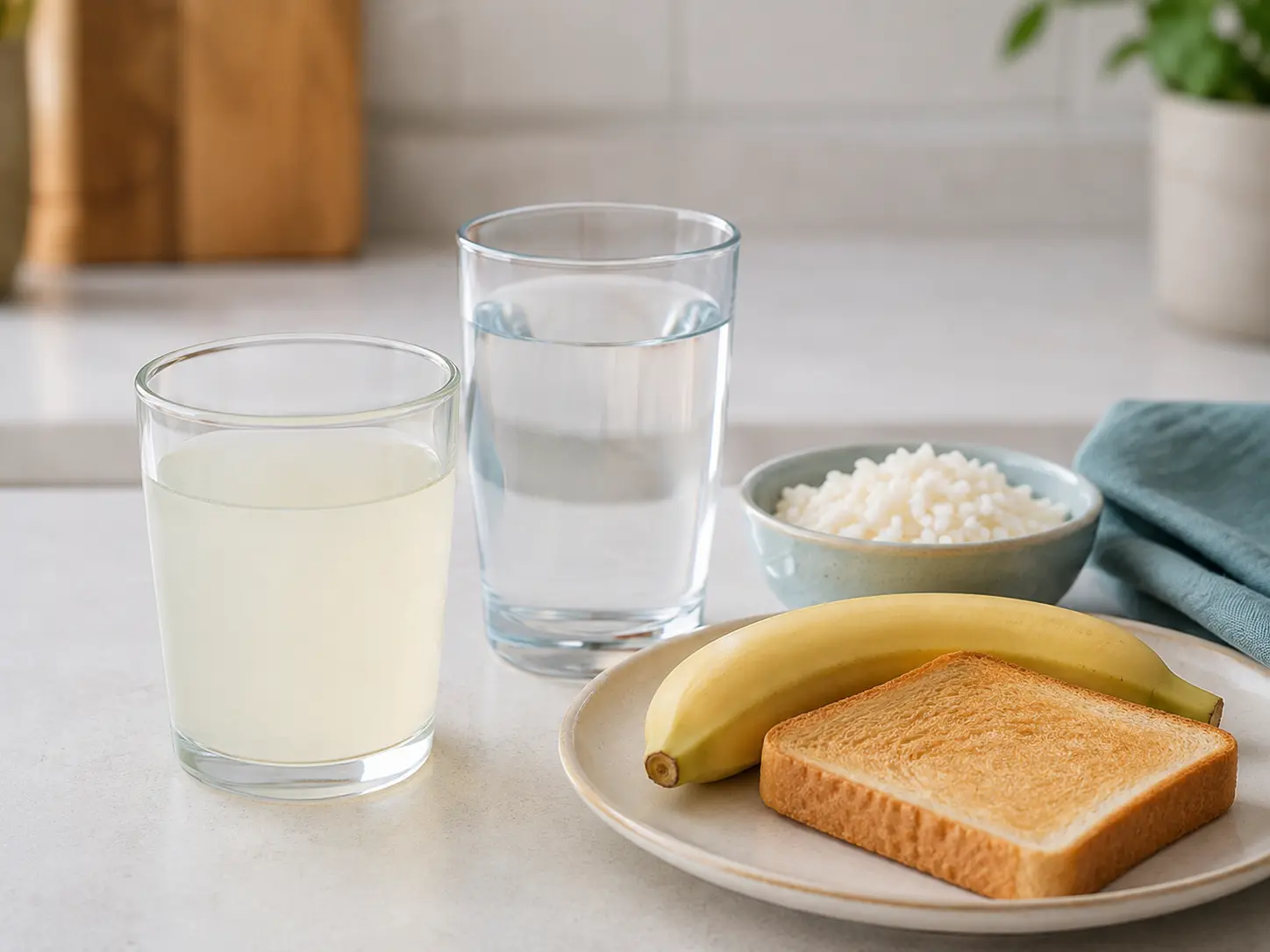
Drink small amounts frequently. An oral rehydration solution is more useful than water alone when appropriate. Blood in the stool, high fever, severe pain, reduced awareness, dehydration or persistent symptoms require medical assessment. Antidiarrhoeal medication is not suitable for everyone.
Medical principle
Many digestive symptoms are temporary, but their intensity, duration, pattern and accompanying signs determine whether self-care is enough. Broadly eliminating foods without a diagnosis can cause nutritional deficiencies.
Practical steps that may help
- Record symptoms, foods, medicines and bowel patterns for several days to help identify connections.
- Eat slowly, increase fibre gradually and drink adequate fluids.
- Do not use over-the-counter digestive medicines long term without investigating the cause.
When should you seek medical care?
Bleeding, black stools, persistent vomiting, fever, weight loss, severe or worsening pain, a rigid abdomen, inability to pass gas or dehydration need prompt assessment.
View a trusted medical source ↗