Vegetables and fruit, appropriate protein and whole grains form the basis of a varied meal.
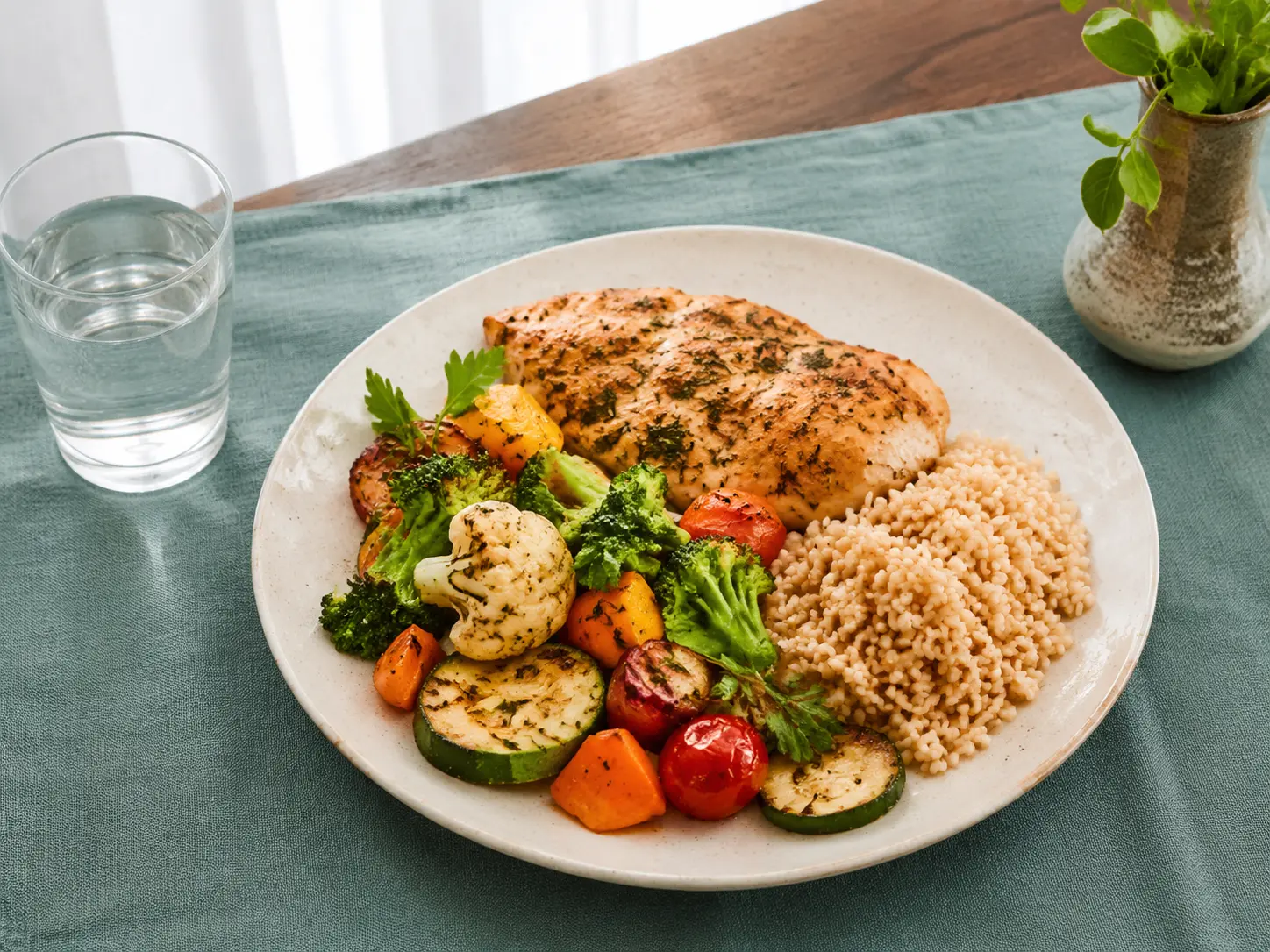
A simple pattern is to fill much of the plate with vegetables, alongside a protein source such as pulses, fish, chicken or eggs, and some whole grains. Appropriate amounts depend on age, activity and medical circumstances. Variety and minimal processing matter more than any single food.
Medical principle
A healthy diet relies on variety, balance, moderation and minimally processed foods, rather than a miracle food or eliminating an entire food group. Energy and fluid needs vary with age, activity, weather and underlying illness.
Practical steps that may help
- Base weekly shopping on vegetables, whole fruit, pulses, whole grains and lean protein sources.
- Compare sodium and added-sugar labels, and avoid making sugary drinks an everyday choice.
- Prefer small, sustainable changes to strict short-term diets.
When should you seek medical care?
Unintentional weight change, difficulty swallowing, repeated vomiting, severe weakness or restrictive diets during pregnancy or with diabetes, heart or kidney disease should be discussed with a doctor or dietitian.
View a trusted medical source ↗